


A
AUTUMN JAPAN
Red Maples + Emperor's Cup Sumo Championship.
9 DAYS
18 PEOPLE
3890 EURO


9 days
15.11 - 23.11.2026
DESCRIPTION
Japan is a remarkable country that has managed to preserve its unique identity, traditions, and ancient customs even in the era of advancing Western civilisation. At the same time, Japan is considered one of the most technologically advanced nations in the world. The deep love for ancient traditional ways of life, combined with cutting-edge technological achievements, sets the Japanese apart from other peoples of Asia and our Planet.

There are many words that instantly evoke associations with Japan. Samurai, ninja, geisha, karate, sumo, Momiji, sushi — and many others that we already know well and, upon hearing them, are instantly transported in our minds to that distant, mysterious island nation.

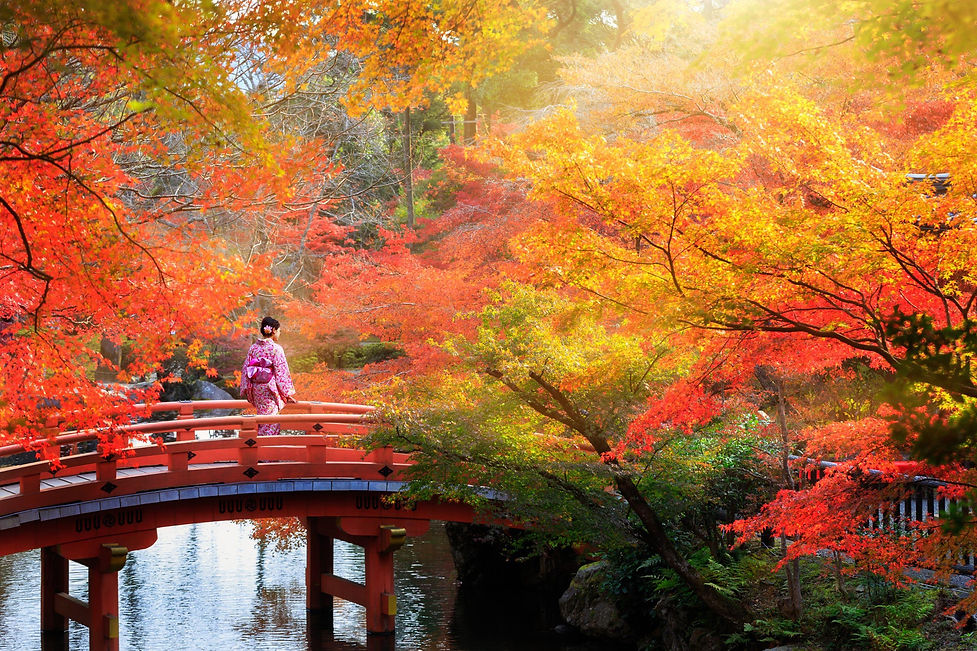
Japan is, above all, a country of traditions, and one of those national traditions is the period of leaf-viewing, or Momiji, as they call it. The famous Momiji season is named after Japanese maples, which are celebrated for their mesmerising leaf shape and vivid crimson autumn colours.

In addition to enjoying Momiji, we will have the unique opportunity to attend the final annual sumo tournament featuring the world's strongest wrestlers. We will watch the bouts for the Emperor's Cup (天皇賜杯, Tennō Shihai) — the main perpetual trophy awarded to the winner of the top division (Makuuchi).

For us, this is a unique opportunity to witness in person the performances of our Ukrainian wrestlers (rikishi): Aonishiki Aratu (Danylo Avgustyshin), a two-time Emperor's Cup champion, a also another Ukrainian sumo wrestler, Shishi Masaru (Serhiy Sokolovskyi), who also competes in the top division.

Sumo in Japan originated over 2,000 years ago as a Shinto ritual to appease the gods (kami) and ensure a bountiful harvest. The dohyo ring is considered a sacred space. A roof in the style of a Shinto shrine is often suspended above it, emphasising the spiritual status of the arena. We will therefore witness one of Japan's most fascinating traditions — one that is over 2,000 years old.

Let us continue introducing you to Momiji. The Momiji season begins in September and reaches its peak in November. In ancient times, wealthy courtiers, accompanied by musicians, greatly enjoyed gazing at the crimson Momiji leaves while leisurely gliding across the surfaces of lakes and rivers in boats.

Autumn in Japan is very warm and almost entirely rain-free, which means there is no excessive humidity. This is an important fact for those planning to visit Japan in autumn — after all, it would be rather disappointing to arrive in the country of your dreams only to spend all your time indoors waiting for the rain to stop. And under an umbrella, you cannot really see much either. In the areas of Tokyo, Fukuoka, Kyoto and Nara — the destinations of our Paganel expedition — it is widely considered among the Japanese that the leaf-viewing season, or Momiji, is most beautiful in November.

This is also the peak tourist season in Japan, rivalled only by the spring cherry blossom season. During this period, hotels, local travel companies and other tourism-related organisations raise their prices 3–4 times above normal rates. That is why we began preparing for this trip well in advance and have already booked hotels and everything necessary for the journey.

ROUTE

Fukuoka ➙ Hiroshima ➙ Miyajima ➙ Kyoto ➙ Nara ➙ Kyoto ➙ Fuji ➙ Kawaguchiko ➙ Tokyo
• reserved-seat tickets to the sumo tournament for the Emperor's Cup;
• tickets for the Bullet Train — Shinkansen high-speed rail;
• private comfortable coaches;
• ferry tickets Hiroshima–Miyajima and back;
• guided tours with professional local guides speaking Japanese and English;
• accommodation in reliable 4* hotels on a twin-sharing basis (single occupancy available on request at an additional charge);
• all entrance tickets to museums and national sights listed in the programme;
• meals: all breakfasts and selected lunches and dinners;
• services of the Ukrainian group leader from Paganel Studio.
Excursions:
- Fukuoka: the main shrine — Dazaifu Tenmangu;
- Hiroshima: tour of Miyajima Island — one of Japan's three most scenic views — the red torii gate rising from the water, Itsukushima Shrine;
- Fuji–Kawaguchiko: Chureito Pagoda, a traditional village with views of Mount Fuji, Lake Kawaguchiko, Shiraito Falls ("White Threads");
- Kyoto: Daigo-ji Temple, famous for its Benten Pavilion and arched bridge; the Gion geisha district; Kyoto's traditional lanes — Ninenzaka and Sannenzaka; Yasaka Pagoda; Kiyomizu-dera Temple of Pure Water; Fushimi Inari Taisha Shrine with its corridor of red torii gates;
- Nara: Todai-ji Temple, Kasuga Taisha Shinto Shrine, the deer park;
- Tokyo: Ginza, Nihonbashi and Marunouchi, Asakusa district, Senso-ji Temple, Kaminarimon Gate, Nakamise Street;
- international flights to and from Japan;
- meals not specified in the programme;
- single occupancy supplement;
- insurance
- optional excursions, as well as optional activities and transfers on free days.
-
Price for citizens of Ukraine: 110 - 120 dollars
-
Features of receiving: With a visa agency through a courier in Warsaw and Kishenev
-
Other citizenships that do NOT require visas: USA, Great Britain, EU
-
Other nationalities that require a visa: Moldova, Kazakhstan (to be specified)
1. Our company operates as an international travel organizer, therefore groups are formed from travelers from Ukraine, the Baltic countries, the EU, Israel, North America, and other countries. The working languages of the trip are Ukrainian, Russian, and English, depending on the group composition and translation arrangements. Each guide speaks Ukrainian, and in personal communication we respond in the language of the inquiry. If a 100 percent Ukrainian-language trip is essential for you, please уточнюйте this before booking. The company does not cooperate with citizens of the Russian Federation and the Republic of Belarus.
2. Due to the fact that our expeditions do not include international flights to the starting point of the program, we cannot be held responsible for changes in flight conditions by airlines or airport requirements. Since our travelers fly from many different countries and cities, we never participate in the purchase of air travel and limit ourselves exclusively to advisory services in the selection of flights. Air agents or airlines from which tickets were purchased are responsible for the purchase and technical support.
ITINERARY
Day 1
(15.11.2026)
Independent arrival in Fukuoka, transfer and check-in at a comfortable 4* hotel in the city centre. Meeting with the team of guides and tour leaders.
Fukuoka is located in south-west Japan, on the northern coast of Kyushu Island. The city is the administrative centre of the prefecture of the same name and the largest metropolis on the island.

Due to its location, Fukuoka has historically been considered the "Gateway to Asia". It is situated closer to Seoul and Shanghai than to Tokyo. For instance, the distance to the South Korean city of Busan is just around 180 km.

We begin our journey in this very city, and here are 2 important reasons for that.
1. Fukuoka in the autumn season (especially in November) is one of the best travel destinations in Japan, thanks to its mild climate and the late "Momiji" season (red maple leaf-viewing).
2. It is in November that one of the six main professional sumo tournaments in Japan takes place here, drawing spectators from around the world — and we will have the unique opportunity to attend it.
In the afternoon we gather in the hotel lobby, meet our local expert guide, collect our radio earpieces through which you will listen to the tour commentary and guidance, and set off on a short introductory evening walk around the city.

After the tour, dinner on your own. Rest.
At the beginning of the trip, each participant will be provided with headphones for sightseeing. Please treat this gadget with care. At the end of the trip, the headphones must be returned. The penalty for loss is 100 euros.
Day 2
(16.11.2026)
We wake up in the morning. Breakfast at the hotel. We pack our suitcases and check out. We meet our guides, load into our private coach and set off to meet the many exciting events that await us today.
We begin with a visit to the unique Dazaifu Tenmangu Shrine (Dazaifu Tenmangu) — one of the most significant in Japan, dedicated to Tenjin, the god of learning and culture.

The history of the shrine began not with devotion but with fear. After the death of the renowned court scholar-minister Sugawara no Michizane in 903 — who had been exiled from Kyoto through the intrigues of local aristocrats — Japan's capital was struck by plague, which killed the sons of Emperor Daigo, one of those responsible for the exile. In addition, the city was ravaged by heavy rains and typhoons. Several lightning strikes repeatedly hit the imperial palace. The monarch and aristocrats interpreted all this as the revenge of Sugawara's spirit. To appease him, a Shinto shrine — Dazaifu Tenmangu — was built over the scholar's grave, and the deceased exile was posthumously granted the title of "Grand Minister" Daijō-daijin (太政大臣) and was proclaimed a "celestial being" — the patron of sciences and learning.

Dazaifu Tenmangu is the "headquarters" of a vast spiritual network. Japan has over 12,000 Tenmangu shrines, all dedicated to the spirit of Michizane, but the shrine in Fukuoka — built on the site of his grave — is considered the principal one.

At Dazaifu Tenmangu there are several very interesting features you will see.
1. Bull statues: It is believed that rubbing the head of a bronze bull statue brings wisdom and success in studies. According to legend, it was a bull that determined the location of the shrine — stopping and refusing to move any further during the funeral procession of Sugawara no Michizane.

2. The Flying Plum Tree (Tobi-ume): To the right of the main hall grows a legendary tree which, according to tradition, flew to Michizane from Kyoto, longing for its master in exile. In total, the grounds feature around 6,000 plum trees of 200 varieties, which bloom beautifully from January to March.

3. Taiko-bashi Bridges: Three red arched bridges over Shinji-ike Pond (shaped like the kanji character for "heart") symbolise the past, present and future. As pilgrims cross them, they perform a ritual purification.
Next, we enjoy a delicious Japanese lunch. During the meal, we try to make time for the "Paganel Introductions Evening" and the presentation of expedition T-shirts and badges. After lunch, we dash to the Fukuoka International Centre to witness the unique spectacle of the Kyushu Basho — bouts between the world's strongest sumo wrestlers competing for the Emperor's Cup.

The timing of our visit has been planned so as to catch the bouts of the strongest and most distinguished sumo wrestlers competing at Kyushu Basho. We cheer for our own. We get acquainted with the unique Japanese tradition, which has an enormous number of subtleties that our guides will explain to you.

After the day's tournament bouts, we make our way to the railway station. We collect our suitcases from the coach, bid farewell to Fukuoka, board our high-speed Shinkansen bullet train and speed off to Hiroshima.

On arrival in Hiroshima, we check into our comfortable nearby hotel. Dinner on your own. Rest.
Meals included: breakfast, lunch.
Day 3
(17.11.2026)
We have breakfast. Drink our coffee. Pack our things. Check out of the hotel. We leave our suitcases in the hotel storage. We take our cameras and good spirits. We meet our guide. We check our earpieces. We make our way to the port, then take the ferry to Miyajima Island.

Miyajima Island is home to the UNESCO World Heritage-listed Itsukushima Shrine — a Shinto shrine built over the water — whose large red torii gate rises above the sea and can only be approached at low tide. The scenery of Miyajima is recognised in Japan as one of the three most beautiful views in the country.

Itsukushima Shrine is one of Japan's most famous Shinto shrines, located on Itsukushima Island, better known as Miyajima. The architectural complex of the shrine is also listed as a UNESCO World Heritage Site.
The magnificent torii gate, marking the entrance to the shrine's sacred grounds, stands directly in the sea and appears to float on the water at high tide.

At low tide, the waves recede to reveal a path to the gate, allowing visitors to approach
this magnificent structure. We enjoy a delicious lunch during the tour at one of Miyajima's restaurants.

After lunch, you can stroll around the territory surrounding the shrine and hand-feed the persistent deer, who roam freely here, just as they do in Nara.

Watch a service at the Shinto shrine, relax in the local cafés and restaurants, and treat yourself to the freshest oysters accompanied by traditional warm sake.

After exploring to our hearts' content, we take the ferry back to the port and then make our way to the hotel. We collect our suitcases and take the evening Shinkansen from Hiroshima Station to Kyoto.
We arrive in Kyoto. We check into our comfortable 4* hotel for the next three nights. Dinner on your own. Rest.
Meals included: breakfast, dinner.
Day 4
(18.11.2026)
Another wonderful autumn day in Japan! After breakfast we grab our cameras and rain jackets and head down to the hotel lobby where our local guide awaits the Paganel group. Our private coach is already waiting outside. Today's programme: the Golden Pavilion Kinkaku-ji, the Rock Garden of Ryoan-ji Temple and the iconic Momiji photography spot — Daigo-ji.
Kyoto was the capital of Japan from the late 8th to the mid-19th century, and remains the country's most important cultural and religious centre — a place where traditions and crafts are preserved. In Kyoto we will visit one of the most beautiful spots for Momiji viewing: the famous Daigo-ji Temple.

In 874, Rigen-Daishi, the grandson of the monk Kukai (a renowned propagator of Buddhist teachings), established Reisen (a hot spring) near a mountain and built a temple dedicated to the Buddhas Juteikanon and Nyoirin Kannon. Thus, Daigo-ji Temple was founded. The nearby mountain also took the name Daigo-ji.

The temple near the mountain's summit became a refuge for monks seeking solitude. It was under the patronage of three emperors who served here as monks: Daigo, Suzaku and Murakami. The Yakushido, Godaido and Kami-Daigo halls were constructed.

Then the Shakado Hall and a five-storey pagoda were constructed, completing the Shimo-Daigo ensemble in 950. The temple complex consists of numerous buildings with wall paintings, a garden and a five-tiered pagoda — all designated National Treasures of Japan. It is listed as a UNESCO World Heritage Site as part of the "Historic Monuments of Ancient Kyoto".

Our visit to Daigo-ji takes several hours, as the temple is quite far to travel to. Afterwards we return to Kyoto and head to the famous Gion district, where geisha and their young apprentices — maiko — live and work.

You can often spot them on the street here, dressed in traditional costumes with traditional hairstyles and make-up.
Day 5
(19.11.2026)
We wake up a little earlier. Breakfast at the hotel. We leave our luggage and suitcases behind, taking only cameras, jackets, umbrellas just in case, and our best mood. We meet our local guide, hop on a local train and head towards the fascinating town of Nara.

Nara is especially beautiful during the maple-viewing season. We will also get to meet again what are arguably the most interesting residents of the Japanese islands — the charming deer of the ancient capital of Nara.

Nara is a remarkable city. We have never in our lives seen a city where, instead of stray dogs and cats, 1,200 deer roam freely. Once a year the city authorities round up the deer and trim their antlers — because when begging snacks and crackers from passers-by, the deer are prone to giving you a nudge from behind.

If the antlers were not trimmed, instead of enjoying an encounter with the animals, you would end up poked and injured. So we stroll around and do not let the persistent deer take liberties with us.

The city of Nara was the capital of Japan in the 8th century. It is the place from which the spread of Buddhism across the entire country began, and it remains a major religious centre to this day. The Todai-ji temple complex is considered the largest wooden structure in the world. Its centrepiece is the bronze Buddha statue known as the “Daibutsu”.

Surrounding the temple is a beautiful park that connects the Todai-ji grounds with the other nearby temples and shrines into a single complex. Tame deer roam freely throughout the park and can be fed with crackers sold right there.

On one side of the deer park stands Kasuga Taisha — one of the most important shrines of Japanese Shinto. It is famous for its ancient bronze and stone lanterns, installed and hung throughout its considerable grounds.

Lunch during the tour at midday. On the way back from Nara to Kyoto, we visit yet another extraordinary place in Japan — the shrine of 1,000 red torii gates: Fushimi Inari Taisha.
Fushimi Inari Shrine is one of the most famous and visited Shinto shrines in Japan, located in the southern part of Kyoto. It is the head shrine of more than 30,000 shrines dedicated to the deity Inari.

Fushimi Inari is also one of the most beautiful places in Japan! It is known primarily for the countless torii gates donated by worshippers. The gates line the path to the shrine, which winds up into the wooded mountain of Inari-san, where the main shrine building is located.

The most recognisable symbol of the shrine is the endless corridors of vivid orange (vermilion) gates stretching 4 kilometres up the slopes of the sacred Inari mountain.

Walking all the way to the main shrine building along this avenue takes approximately two to three hours. However, we will stroll for around 1–2 hours as part of our tour and then head back to rest in Kyoto. Return to Kyoto. Dinner on your own. Rest.
(Meals included: breakfast and lunch)

We have a scheduled lunch at midday in one of the city's excellent restaurants. We then set off to stroll through the traditional lanes of the Higashiyama district, with its many temples, historic houses and, of course, souvenir shops offering unique goods, some crafted by the skilled hands of Kyoto artisans.

We gradually make our way upward, past Yasaka Pagoda — where we pause for a few beautiful photos — towards Kiyomizu-dera, the Temple of Pure Water, which we will also visit today.

Kiyomizu-dera (Jap. 清水寺 — "Temple of Pure Water") is one of the most famous and picturesque Buddhist temple complexes in Japan, located in eastern Kyoto in the Higashiyama district. Founded in 778, it is listed as a UNESCO World Heritage Site and is the symbol of the city.

The temple's name comes from a crystal-clear spring that flows from the mountains. Legend has it that the monk Enchin discovered this spring after a prophetic dream and founded a place of worship here for the goddess Kannon. Later, General Sakanoue no Tamuramaro helped expand the temple in gratitude for the healing of his wife.

In the evening, at sunset, Kiyomizu-dera offers a breathtakingly beautiful and romantic view of the city of Kyoto. Especially during the Momiji season! We take a hundred beautiful evening photographs. We seek out interesting angles and views. We listen to the commentary through our earpieces.

We admire the city in the evening light and then descend. Those who wish stroll around the centre of Kyoto; the rest return to the hotel. Dinner on your own. Rest after a full day.
(Meals included: breakfast and lunch)
Day 6
(20.11.2026)
We wake up. Breakfast. Check out of the hotel. We grab our suitcases and head for our Shinkansen bullet train. Today we have a rendezvous with Mount Fuji — the beloved mountain of all Japanese artists and poets. At this time of year it is already dressed in its snowy white attire and blindingly beautiful in good weather. As we ride the Shinkansen towards the Fuji-Kawaguchiko area, we earnestly wish for clear skies.

On arriving at the station, we load our suitcases into our private coach and head first to Shiraito Falls, poetically named “White Threads”. Streams of water merge into a single symphony, sounding different in fair and rainy weather. Against the dark background, the white threads of the waterfalls appear even whiter and more elegant — an ideal spot for outstanding photographs!

In the middle of the day we have a delicious Japanese lunch. Then we visit a very beautiful traditional old Japanese village.

This is an open-air museum where traditional old houses have been preserved, and where you can enter, sit on the tatami, and meditate on the magnificent Mount Fuji, which looms from every window.

This place is very beautiful and will provide you with a hundred wonderful photographs. You can also buy souvenirs, taste traditional Japanese sweets and fruit, hire Japanese costumes and photograph yourself among the ancient Japanese lanes and houses.

After exploring to our hearts' content, we board our coach and head to the town of Kawaguchiko. We check into a comfortable 4* hotel that has hot spring baths. We relax in the thermal baths and then head to the included group dinner.
Tonight we will sleep in the company of the Great Mountain, which has also grown a little weary after today and is ready for some rest.

Please note that *Mount Fuji may not be visible in overcast weather.
(Meals included: breakfast, lunch, dinner)
Day 7
(21.11.2026)
After breakfast we pack our suitcases, haul them to our private coach, load up and set off on a magnificent tour with our expert guide through the most picturesque areas around Mount Fuji. Perfect reflections of the mountain in the local lakes are a favourite target for Japanese photographers who know the best spots.

Its graceful silhouette looks especially picturesque against the red maples at Chureito Pagoda. The path to Chureito Pagoda itself is also very beautiful during the Momiji season — early in the morning here you can take truly stunning photographs. The key is to rise early, before dawn.

And the view that awaits you further along is perhaps the most iconic shot in the world — the pagoda with Mount Fuji! You have of course seen it many times, but now you can take that photo yourself. And if the maples and the weather cooperate, it will blow up your Facebook or Instagram :)

Having admired the maples against the pagoda and Fuji, we descend to our coach and head to Lake Kawaguchiko. There too are many interesting and picturesque vantage points used by photographers from around the world to capture the beauty of autumn Japan.

Having savoured the extraordinary views from all these scenic spots and having taken more than a hundred photographs, we make our way to Shizuoka Station, switch from the coach to the comfortable Shinkansen bullet train and travel to the city of Tokyo, where we will stay for the next 2 nights in a cosy 4* hotel in the stylish Tokyo district of Ginza.
(Meals included: breakfast and lunch)
Day 8
(22.11.2026)
We wake up at a leisurely pace. We enjoy a good breakfast at the hotel. We meet our Japanese expert guide in the hotel lobby. We check our earpieces. We set off on our city tour.

A walk through the historic centre and an introduction to the history of Edo-Tokyo — the districts of Ginza, Marunouchi and Nihonbashi. At midday we bid farewell to our expert guide, and together with our tour leader we head to the famous Shibuya Crossing — the busiest intersection in Tokyo and one of the most bustling in the world.

The green light turns on simultaneously from all four directions and several hundred people — reaching up to 1,000 during peak hours — surge off in every direction at once, somehow dodging each other with the effortless ease of long practice. For its vivid yet orderly human bustle, the crossing is beloved by film directors and is known worldwide through television series, feature films and advertising campaigns.

Outside Shibuya Station stands the statue of the faithful dog Hachi, who every day waited in the same spot for his owner — a professor at Tokyo University. After the professor's sudden death, the dog continued to come to the station every day for 9 years in anticipation of his master's return, becoming first a symbol of loyalty in the eyes of local residents, and then in the eyes of all Japanese. In 2023 the Hachiko statue turned exactly 100 years old.

Next we have free time for shopping, souvenir hunting or simply exploring on your own. In the evening we gather at one of the restaurants in our neighbourhood for a farewell dinner. We share impressions and photographs from our wonderful autumn journey through unique and unforgettable Japan.

We return to the hotel. Rest.
(Meals included: breakfast.)
Day 9
(23.11.2026)
Farewell to Autumn Japan. Unfortunately, all things must come to an end, and the time to return home has arrived. Our suitcases are packed, hundreds of photographs have been taken, and many pleasant memories of the country, new friends and an autumn journey to the Land of the Rising Sun remain. Some may stay a day or two longer in Tokyo. As departure times vary, transfers are on an individual basis. Shinkansen trains from Tokyo Station depart every half hour to Narita. We wake up in the morning. We have breakfast. We say our goodbyes to each other and to our guides. Farewell tears. A touch of sadness…
We make our own way to the airport.
Flight home.
(Meals included: breakfast)

We are unique
For many years, we have been traveling the world to our small planet's most remote and unusual places. We do not use the services of domestic travel agencies. The trips we invent and carry out are always unique and have their unique zest, charm, and adventurous spirit.

WHY WITH PAGANEL?
Creation
The first thing that interests us is creativity in everything. During the expeditions, we shoot a lot of videos, take pictures, write stories, draw pictures. If you are interested in a creative approach to life and travel, then WELCOME... we are very happy to meet you!

Interest
By joining our team, you join a kind of club-family, which already consists of several hundred people who are interested in discovering the world with us.

Since most of the expenses for the organization of the trip are air tickets and travel documents for other types of transport, accommodation, excursions, services of local companies and guides, etc. are not refundable in case of your cancellation of the trip. We simply have no way to return it.
.png)